
2 Dec 2025
- 0 Comments
For decades, queer history has been written by people who didn’t live it. Books, documentaries, even pride parades often skip over the people who kept the movement alive when no one else would: sex workers. They weren’t just participants-they were organizers, funders, protectors, and the first to show up when the police raided gay bars or when the AIDS crisis left families behind. If you think queer liberation started with Stonewall and ended with marriage equality, you’re missing the spine that held it all together. The truth is, sex work has always been part of queer survival. And it still is.
Take Paris in the early 2000s. A young trans woman from Lyon, kicked out at 16, found shelter in Montmartre by offering companionship to strangers. She didn’t call herself an activist. But when she saved enough from her clients-some of whom found her through escort girl le-she paid for a friend’s HIV meds, bought a bus ticket to a safer city, and hosted weekly dinners for other queer kids who had nowhere else to go. That’s not just survival. That’s resistance.
Sex Work Is the Original Mutual Aid Network
Before there were queer support hotlines or nonprofit grants, there were people exchanging money for safety, affection, and information. In the 1980s, when governments ignored AIDS, it was sex workers who handed out condoms in alleyways, translated medical jargon for non-English speakers, and drove people to clinics when ambulances refused to pick them up. They didn’t wait for permission. They didn’t ask for approval. They just did what needed doing.
Think about it: who else had the mobility, the anonymity, the access to networks that didn’t show up on official maps? Street-based workers knew every safe corner, every friendly bartender, every cop who wouldn’t arrest a trans girl for walking at night. They shared those secrets. They built trust. That’s not a footnote-it’s the blueprint for community care.
Why the Movement Still Leaves Them Behind
Today, mainstream LGBTQ+ organizations talk about inclusion. But ask them to fund a trans sex worker’s housing, or to invite someone who trades sex for survival to speak at their gala, and the silence hits harder than any protest sign. Why? Because respectability politics still rules. The goal isn’t liberation anymore-it’s assimilation. Marriage. Corporate sponsorships. Pride floats with rainbow logos. But real liberation means protecting the most vulnerable, not polishing the image of the least threatening.
Even in places like Melbourne, where queer rights are often celebrated, sex workers are pushed to the edges. The city’s Safe Streets program targets street-based workers, not the landlords who evict queer youth or the banks that deny them accounts. Meanwhile, the same people who cheer at drag brunches won’t touch a petition to decriminalize sex work. That’s not allyship. That’s hypocrisy dressed in glitter.
The Myth of the ‘Tragic Victim’
Too often, stories about sex workers are told as tragedies: abused, trafficked, broken. But that’s not the whole story. Many sex workers choose this work because it gives them control-over their time, their bodies, their income. For nonbinary folks rejected by traditional jobs, for trans women barred from offices and retail, for undocumented migrants with no other options, sex work isn’t a last resort. It’s the only path that lets them breathe.
One trans man I met in Sydney worked as a cam model while studying psychology online. He told me, “I don’t need your pity. I need you to stop calling me a victim so you can feel better about yourself.” That’s the real issue. Society wants sex workers to be silent, grateful, and invisible. But liberation demands visibility. And agency. And power.
How the Law Makes Things Worse
Every country that criminalizes sex work sees more violence, more arrests, more deaths. Sweden’s Nordic model-punishing clients instead of workers-sounds progressive until you see the results: workers forced underground, clients harder to identify, and police still targeting trans women for “loitering.” In Australia, laws vary by state. In Victoria, indoor sex work is legal, but only if you’re alone. No partners. No coworkers. No safety. That’s not regulation. That’s isolation dressed up as protection.
Meanwhile, the people who actually benefit? Brothel owners, landlords, and tech platforms that profit from ads like escort paris sexe without lifting a finger to protect the workers behind them. The system isn’t broken. It’s working exactly as designed-to keep power in the hands of those who don’t do the work.
What Real Solidarity Looks Like
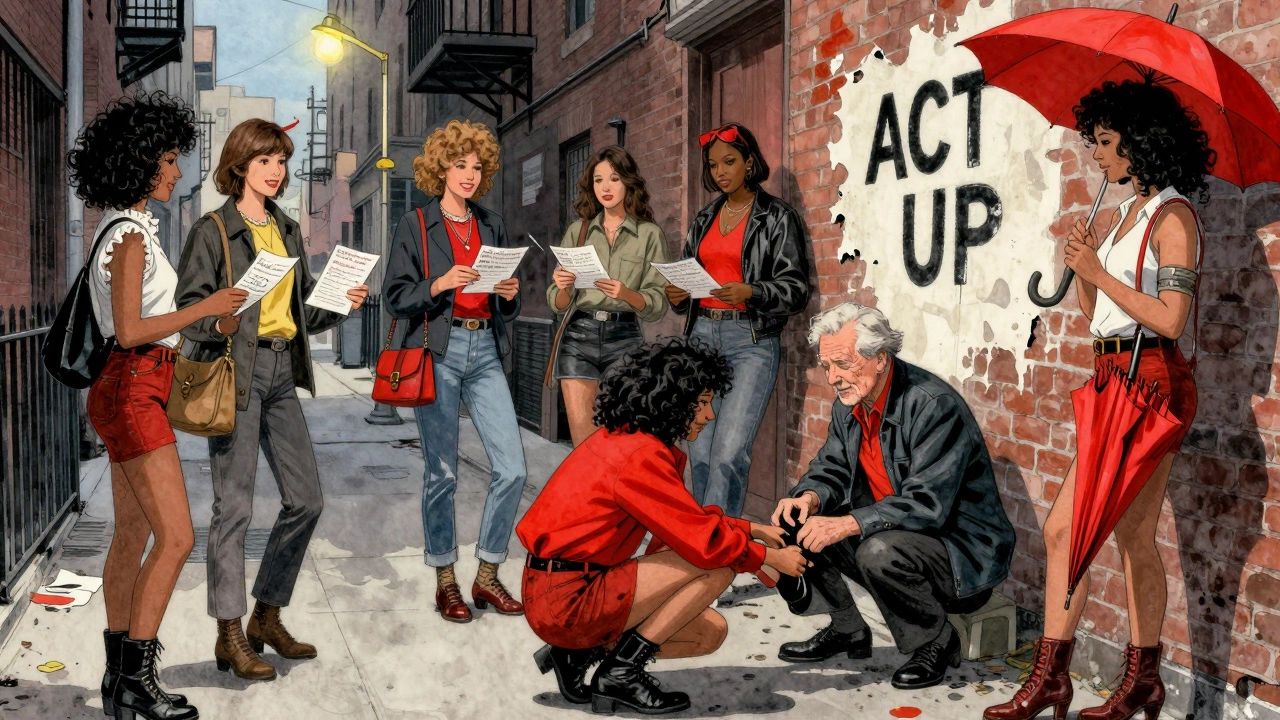
Real queer solidarity doesn’t mean posting a rainbow flag and calling it a day. It means showing up when it’s uncomfortable. It means demanding that LGBTQ+ centers hire sex workers as peer support staff. It means pushing for housing programs that don’t require “clean records.” It means funding worker-led collectives like the Red Umbrella Fund, which gives grants directly to sex workers in over 40 countries.
And it means listening. When a trans sex worker says she needs decriminalization, not rescue, believe her. When a nonbinary person says they’re safer working independently than in a shelter, honor that. Liberation isn’t about saving people. It’s about removing the barriers that keep them from saving themselves.

The Power of Visibility
Queer liberation can’t be built on erased histories. The names of the sex workers who led the first protests in New York, who organized the first AIDS support groups in San Francisco, who taught others how to stitch their own safer-sex kits-they’re not in the textbooks. But their legacy is in every queer person who lives freely today.
That’s why it matters when a trans woman in Berlin posts a video explaining how she pays her rent with income from 6escort paris and still finds time to volunteer at a youth drop-in center. That’s why it matters when a queer teenager in Toronto learns that their hero, a nonbinary activist who helped pass the first decriminalization law in Canada, once worked the streets. Visibility isn’t just representation. It’s survival.
What You Can Do Right Now
You don’t need to start a nonprofit. You don’t need to march. You just need to stop looking away.
- Donate to sex worker-led organizations like SWOP or the Global Network of Sex Work Projects.
- Use your voice to demand that LGBTQ+ groups include sex workers in leadership roles.
- Challenge friends who say, “I support queer rights, but not that.”
- Learn the difference between trafficking and consensual sex work. They’re not the same.
- Support platforms that pay workers fairly and give them control over their content.
And if you’re in Paris, and you see someone working the streets-don’t call the police. Don’t offer unsolicited advice. Just say hello. Sometimes, that’s the only safety net left.
The Spine Doesn’t Break
Sex work isn’t a side note in queer history. It’s the backbone. It’s the muscle that carried us through the darkest years. It’s the voice that refused to be silenced when the world told us to stay quiet.
And it’s still here. In the cam girls who fund their transition surgeries. In the trans women who run underground safe houses. In the nonbinary folks who trade companionship for rent while studying law. They’re not waiting for permission to be free. They’re already free.
Queer liberation isn’t a destination. It’s a daily act of defiance. And it’s still being written-by the people who’ve always been there, even when no one was watching. Don’t let them become a footnote again.
Because the spine doesn’t break. It holds.